
Tracking walking consistency and step goals effectively requires shifting your focus from hitting a rigid single-day number to evaluating your weekly rhythm. Rather than obsessing over an all-or-nothing threshold, examine when, how long, and under what circumstances you naturally move. By reviewing past step history, calculating rolling weekly averages, and identifying recurring daily lulls, you can establish realistic targets that fit your lifestyle.
Consistency in physical activity is not about maintaining flawless streaks. It is about establishing reliable, repeatable patterns of movement that support long-term cardiovascular health and general well-being. When you understand how your schedule shapes your step count, you can adapt your routine without burnout or guilt.
Moving Past the Perfectionist Trap in Step Tracking
Many common fitness tracking approaches treat every missed daily milestone as a failure. A standard target like 10,000 steps originated as a marketing campaign rather than a strict clinical mandate. Public health guidelines from the Centers for Disease Control and Prevention (CDC) emphasize accumulating at least 150 minutes of moderate-intensity aerobic movement across the week, which can be divided into smaller daily segments that match your personal routine.
When you review your personal walking history, pay attention to the distribution of your steps across seven-day windows. A workday filled with back-to-back meetings might naturally yield fewer steps than an active weekend morning. Treating these fluctuations as normal variations helps you avoid abandoning your routine altogether after a low-step day. Measuring your overall volume and habit frequency over rolling weekly periods provides a far more accurate picture of your true activity level than any single day's total.
Analyzing When and How You Naturally Move
To build lasting consistency, you must identify where your walking steps actually come from. Daily steps typically fall into two categories: incidental baseline movement (such as running errands, doing chores, or walking between rooms) and deliberate walking sessions (such as an intentional morning neighborhood stroll or an evening brisk walk).
Examine the timing of your daily movement across an entire week to uncover distinct personal trends:
- Morning vs. evening velocity: Are your fastest, most intentional walks clustered before work, during lunch breaks, or in the late afternoon?
- Weekday vs. weekend shifts: Does your total movement drop significantly on specific workdays due to commuting or desk commitments?
- Activity clustering: Do you accumulate the bulk of your steps in one concentrated outing, or are they spread evenly in short increments throughout the day?
Recognizing these natural rhythms prevents you from trying to force long walks into your most demanding time slots. Instead, you can schedule dedicated walking windows during periods when your calendar and energy levels naturally permit them.
Using GoAtlas Insights to Review Your Trends
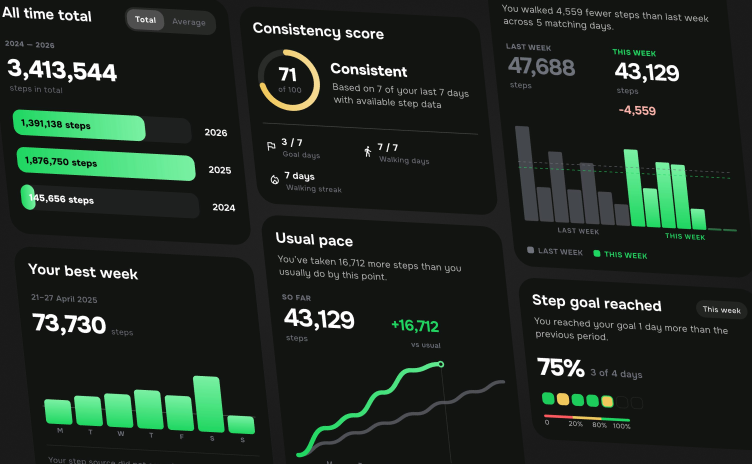
Reviewing raw step totals can sometimes obscure the broader story of your progress. The GoAtlas app provides dedicated Steps Insights designed to help you analyze your walking patterns clearly and objectively over time.
Inside GoAtlas, you can explore your usual walking pace broken down by time of day, see the specific days you reached your chosen targets, and check your overall consistency score. By aggregating all-time step totals alongside daily pacing data, GoAtlas helps you understand how your movement habits evolve across weeks and months. Rather than judging a single afternoon in isolation, you can review whether your routine is stabilizing over time, spot the hours when you naturally move best, and fine-tune your schedule to support steady, long-term walking habits.
Setting Realistic Targets That Adapt to Real Life
Once you understand your baseline trends, setting sustainable targets becomes straightforward. If your current weekly average is 5,000 steps per day, abruptly jumping to an aggressive goal of 10,000 often leads to fatigue or skipped sessions. A sustainable adjustment involves raising your daily baseline by 500 to 1,000 steps, which equates to roughly 5 to 10 minutes of additional brisk walking.
Consider establishing dynamic targets that account for your weekly schedule. Designate higher-volume days for weekends or open weekday mornings, and set flexible, lower minimums for high-stress or travel-heavy days. When bad weather or busy schedules interrupt your plans, remember that accumulating several brief five-minute walking breaks still contributes meaningfully toward your weekly aerobic activity goals. Building resilience into your routine ensures that occasional interruptions never derail your long-term momentum.
Try this on your next walk
Before stepping outside, check your step history for the past seven days and identify the single day of the week that consistently has your lowest step total. On this walk, focus on establishing a simple, repeatable 10-minute route—such as an out-and-back loop from your front door—that you can realistically complete on that specific challenging day next week without disrupting your schedule.